
How to Stop the Cycle of Paying Off and Reusing Credit Cards
You pay the card down, it creeps back up, and you start over. Here is why the loop keeps turning and how to stop it for good.
In this article
- Why the Balance Keeps Coming Back
- What New Charges Really Cost While You Pay
- Step 1: Give Every Surprise a Place to Land Besides the Card
- Step 2: Rebuild the Budget Around Your Real Life
- Step 3: Decide What Happens to the Paid-Off Card
- Step 4: Watch Out for the Consolidation Rebound
- Step 5: Make Progress Visible So the Plan Survives
- Stop the Cycle of Credit Card Debt With a Plan You Can See
- Frequently Asked Questions
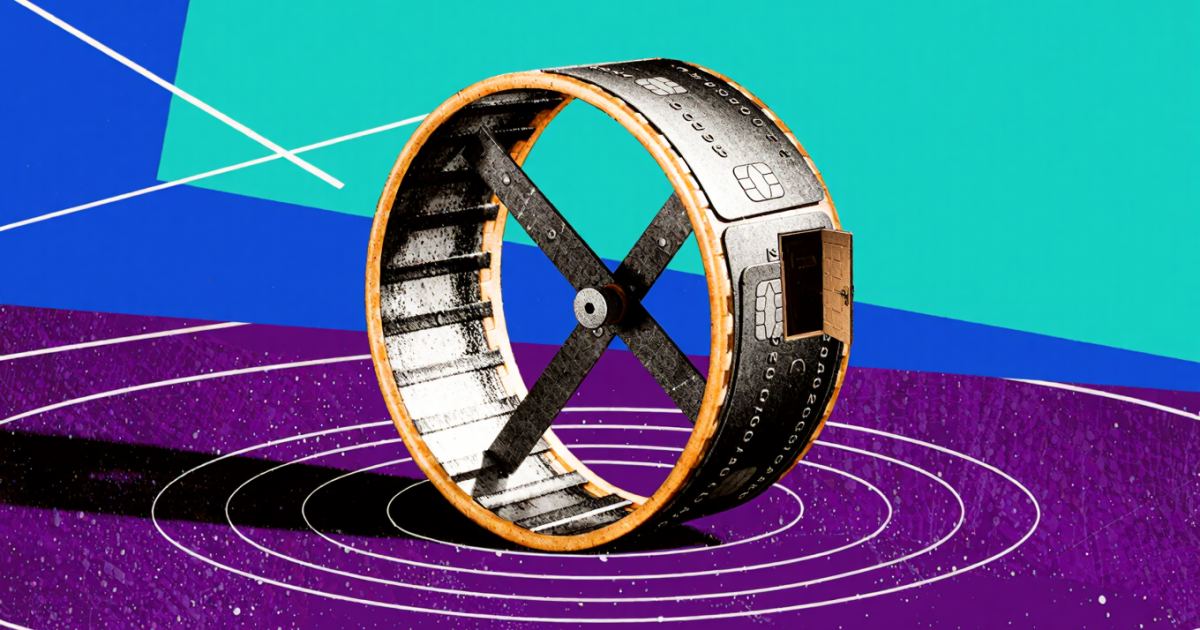
You paid the card down once. Maybe twice. Then a birthday, a tire and a slow month later, the balance was right back where it started. If you want to stop the cycle of credit card debt, the fix is rarely more willpower. It is changing the machinery that keeps sending you back to the card.
Why the Balance Keeps Coming Back
The cycle has a familiar shape. You buckle down and pay the card to zero, or close to it. The card now has a full credit limit and nothing else changed: the same bills, the same irregular costs, the same thin savings. So the next surprise lands where it always lands.
That is not a character flaw. It is a structural problem with three moving parts:
- No cushion. When there is no cash set aside, the credit card is the emergency fund by default.
- Irregular costs treated as surprises. Car registration, holiday gifts and the annual vet visit are not emergencies. They are bills that arrive once a year and get forgotten in between.
- A budget built around the old balance. You paid the card down, but you never decided where the freed-up money and the freed-up credit should go.
Card issuers understand this loop better than anyone. An open credit line with no balance is an invitation, and they are happy to keep sending them.
It also helps to know why the debt is so sticky in the first place. Our explainer on why credit card debt is so hard to pay off covers the interest mechanics. This guide is about the behavior around the card, especially what happens after you pay it down.
What New Charges Really Cost While You Pay
The cycle is not only about reaching zero and starting over. It also runs in slow motion while you are still paying. Every new charge on a card that carries a balance usually starts accruing interest right away, because you lose the grace period until you pay in full.
Here is an illustration. Say you owe $4,800 on a card at 23% APR and pay $400 a month. Watch what steady new spending on the same card does to the finish line.
| New charges per month | Months until the card hits zero | Total interest paid |
|---|---|---|
| $0 | 14 | About $707 |
| $100 | 20 | About $988 |
| $200 | 33 | About $1,692 |
| $300 | 134 | About $8,504 |
The first three rows feel manageable. The last one is the trap. At $300 a month of new charges, at most $100 of each payment can go toward the old debt, interest takes a big bite of that, and the card takes more than 11 years to clear. You are paying $400 a month and standing nearly still. It is the financial version of walking up a down escalator.
You cannot pay your way out of a cycle that you keep feeding. Stopping new charges on the card you are paying down does more than any extra payment you could add.
If you need help with the daily mechanics of leaving the card at home, our guide on how to stop using credit cards while paying them down goes step by step. Below is the bigger plan: how to break the loop for good.
Step 1: Give Every Surprise a Place to Land Besides the Card
The most reliable way to stop the cycle of credit card debt is to make sure the card is no longer the only answer to an unexpected bill.
That means two separate pots of money:
- A starter emergency fund for true surprises, like a job loss or a medical bill. Even a small one changes the math. Our guide on building an emergency fund while paying off debt shows how to grow it without stalling your payoff.
- Sinking funds for costs you know are coming but forget to plan for: gifts, car maintenance, annual subscriptions, back-to-school. Add up last year's irregular expenses, divide by 12, and set that amount aside each month.
The second pot is the one most people skip, and it is the one that quietly drives the cycle. Most "emergencies" that end up on a card were on the calendar all along.
Step 2: Rebuild the Budget Around Your Real Life
A budget that covers rent, groceries and utilities but ignores the dentist is not a budget. It is a wish. Pull your last three to six months of card and bank statements and list every expense category that showed up, including the awkward ones.
Then assign each category a monthly number. If the numbers do not fit your income, that is useful information, not a failure. It tells you where the card has been filling the gap. Our guide to creating a budget when you have too much debt walks through how to make the numbers work when they start out short.
A good test: could you live on this budget for three months without swiping the card once? If not, find the gap now, before the card finds it for you.
Step 3: Decide What Happens to the Paid-Off Card
When a card hits zero, you have a choice to make on purpose rather than by default.
Keep it open, but out of reach
For most people, keeping the account open helps their credit utilization and the length of their credit history. Put the card in a drawer, remove it from saved payment details in apps and browsers, and use it for one small recurring bill that you pay in full every month. That keeps the account active without letting it back into daily life.
Close it if it keeps pulling you back
If a card has been through the cycle three or four times, its credit score benefits may not be worth the temptation. Closing a card removes its limit from your utilization math, so it can nudge your score, but a score bump is a poor trade for another year of debt. The trade-offs are laid out in should you close credit cards after paying them off.
One more detail when you pay a card to zero: check the next statement. Interest that built up between the statement date and your payment can appear after you thought you were done. Our explainer on credit card trailing interest shows how to catch it so a small leftover balance does not restart the habit.
Step 4: Watch Out for the Consolidation Rebound
Consolidation can help. A personal loan or balance transfer with a lower rate can cut interest and simplify payments. But it carries a specific risk for anyone caught in the cycle: the cards are now at zero, and the debt still exists on the loan.
If the cards fill back up, you now owe the loan and the cards. Anyone weighing this option should read should you use a personal loan to pay off credit cards first, and should have Steps 1 and 2 in place before signing anything.
Step 5: Make Progress Visible So the Plan Survives
Cycles feed on fog. When you cannot see your progress, a small new charge feels harmless. When you can see exactly how many months it adds, it feels like what it is.
Run your balances through the debt payoff calculator and note your debt-free date. Then check it again after any month with new charges. Many people find the moving finish line more persuasive than any rule they set for themselves.
If you have tried before and drifted off course, you are in good company. Our guide on why people struggle to stay on a debt payoff plan covers the most common reasons plans fade and how to design around them. And if you are juggling several balances, the debt snowball vs. debt avalanche comparison can help you choose an order that keeps you motivated.
Stop the Cycle of Credit Card Debt With a Plan You Can See
The cycle ends when three things are true: surprises have somewhere to go, your budget reflects your actual life, and you can see your progress clearly enough to protect it.
Delete Debt AI handles the last part for you. Add your cards and loans, compare Avalanche, Snowball and Highest-Balance plans side by side, set a Savings Goal for your cushion, and watch daily snapshots of your balances shrink. If a new charge sneaks in, you will see what it cost. Create your free account and get off the wheel for good.
Frequently Asked Questions
Why does my credit card balance keep going back up after I pay it off?
Usually because nothing else changed. The card has a fresh limit, but there is still no cash cushion and no plan for irregular costs like car repairs or gifts. The next expense goes on the card, and the balance climbs again. Building a small emergency fund and sinking funds for predictable costs gives those expenses somewhere else to land.
How do I stop the cycle of credit card debt for good?
Stop adding new charges to the card you are paying down, build a small emergency fund, and set aside money each month for predictable irregular expenses. Rebuild your budget so it covers your real spending. Then decide deliberately what to do with each paid-off card, and track your progress so you can see what any new charge costs you.
Should I cut up my credit cards to stop overspending?
You can remove a card from your wallet and from saved payment details without closing the account. That stops impulse use while keeping its credit limit working for your utilization. If a specific card keeps pulling you back into debt despite that, closing it may be worth a small, often temporary credit score effect. The right choice depends on your habits.
Is it bad to use a credit card while paying it off?
It usually costs more than people expect. When you carry a balance, most cards drop the grace period, so new purchases typically start collecting interest right away. Ongoing charges also push your payoff date out, sometimes by years. If you must use a card, use a different one that you pay in full every month.
Will consolidating my credit cards stop the debt cycle?
Not on its own. Consolidation can lower your interest rate and simplify payments, but it also resets your card balances to zero. If the habits and gaps that created the debt are still there, the cards can fill back up while you are still paying the loan. Put a cushion and a realistic budget in place first.
This article is for educational purposes only and isn't financial, tax, or legal advice. Examples are illustrations, not offers. Consider your full situation, and consult a qualified professional for advice specific to you.


